
Ammo 30

$690.40/t

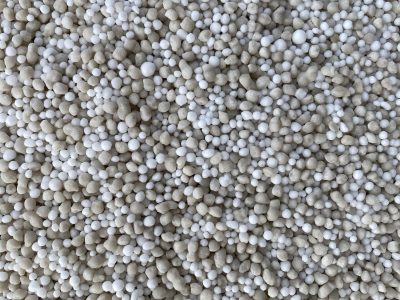
AMMO30 is a  blend of Ammonium Sulphate with a smaller portion of Urea. Best suited to situations when a higher nitrogen to sulphur ratio is required compared to straight Ammonium Sulphate. Contains nitrogen in urea and ammonium forms and sulphur in readily available sulphate from.
NitrogenN: 30.2%
PhosphateP: 0
PotassiumK: 0
SulphurS: 14.9%
CalciumCa: 0
MagnesiumMg: 0

Why Use Ammo 30?

  • Ammo 30 should be used instead of Urea when Sulphate is also a limiting factor to pasture production. This is typically after wet and/or cool periods when available Sulphate has been leached and cooler soil conditions are resulting in slower mineralisation of organic sulphur into plant available sulphate.
  • Ammo 30 should be used instead of straight Ammonium Sulphate when a higher N to S ratio is required.

Product FAQs

When to Use

Autumn, Winter, Spring

Precautions

  • Avoid application before large amounts of rainfall (40ml plus within 10 hours) to reduce any leaching.

Nitrogen's Role in Plants

  • Nitrogen is always the nutrient in highest demand by plants, due to the greater content of nitrogen present on a dry weight basis in comparison to any other nutrient.
  • Nitrogen is a primary component of amino acids which are the building blocks of proteins. Thus, by adding nitrogen to soil the protein content in plants is increased.
  • Nitrogen is part of the chlorophyll molecule, and a part of numerous enzymes and coenzymes. Chlorophyll is responsible for photosynthesis, where sunlight is absorbed and stored in the plant as sugars and proteins.
  • Therefore, nitrogen is an integral part of photosynthesis.
  • Signs of nitrogen deficiency – reduced plant growth, yellowing of the leaf, early crop maturing.

Sulphur's Role in Plants

  • Sulphur is essential in forming plant protein as it is present in cysteine and methionine, two vital amino acids involved in protein synthesis.
  • Key component of coenzymes and vitamins, involved in energy transfer and lipid synthesis.
  • Some sulphur compounds are responsible for the taste and smell of plants, like onions.
  • Sulphur amino acids are at high levels in animal fibres, therefore sufficient sulphur is required for good wool production.
  • Promotes nodule formation in legumes
  • Signs of sulphur deficiency – light green to yellowish coloured young leaves, reduced plant growth rates, plants that are short, small and slender.

Technical Documents

Independent Product Analysis
Blended products are not independently tested. Refer to the individual product components of this blend to see independent testing.